

“Watch Dr. Alburghol explain how L-Citrulline and L-Arginine may naturally support men’s vitality and wellness. Science-backed insights, dosages & practical tips. (Not medical advice — consult your doctor.)”
L-Citrulline vs Arginine: Discover how these powerful amino acids can naturally support healthy blood flow, stamina, and male vitality. Imagine the extra energy and confidence you feel during intense workouts or throughout a busy day — powering through your gym sessions with greater drive and feeling more alert and resilient in everyday life. For many men in the U.S., daily stress and fatigue can drain that natural vitality, and supplements like L-citrulline and L-arginine offer a science-backed way to help maintain healthy circulation and sustained energy as part of an active lifestyle
In this in-depth comparison, we’ll break down L-citrulline vs. arginine, exploring their key benefits for nitric oxide production, erectile function, and overall male performance, all supported by current research.
If you’re looking to support healthy circulation or maintain energy and stamina, these amino acids may be helpful as part of a balanced, active lifestyle. They are supported by research showing potential benefits for vascular health and overall wellness. Let’s break down the differences between L-citrulline and L-arginine so you can make an informed choice about which fits best into your daily routine.
Understanding Nitric Oxide: The Foundation of Better Blood Flow
Before comparing L-citrulline and arginine, we need to know why nitric oxide (NO) is so crucial for the health of men. For a more detailed look at nitric oxide boosters and how they affect blood flow and performance, check out our full review, “Nitric Oxide Boosters: Blood Flow and Performance.”
Nitric oxide is a potent signaling molecule that promotes vasodilation, ensuring healthier and more efficient blood circulation. Improved blood flow can translate into better workouts, quicker recovery, and—yes—stronger, more consistent erections during intimate moments.
For men over 40, declining NO levels—often due to aging, poor diet, or chronic stress—can contribute to lower energy levels and erectile difficulties. Think of NO as the gas pedal of your vascular system: without enough of it, everything starts to slow down. Both L-citrulline and L-arginine function as nitric oxide boosters, but they support NO production through different biological pathways.
Recent studies suggest that these supplements may help support endothelial function, which relates to the health of the inner lining of blood vessels, providing noticeable, real-world benefits.
Why does healthy blood flow matter so much for overall vitality? Good circulation plays a key role in delivering oxygen and nutrients efficiently throughout the body, supporting energy levels, physical endurance, and daily performance. Research suggests that maintaining optimal nitric oxide levels helps promote normal vascular function and blood vessel flexibility as part of an active lifestyle. While supplements can support this process, the best results come from combining them with regular exercise, balanced nutrition, and effective stress management. (PubMed ID: 32081788)
What Is L-Arginine? The Direct Nitric Oxide Precursor
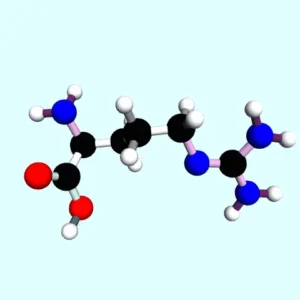
3D rotating model of L-Arginine molecule. Source: Wikimedia Commons (public domain/CC0)
L-arginine is an amino acid your body uses to build proteins, but its most notable role is serving as a direct precursor to nitric oxide (NO). Found naturally in foods like nuts, seeds, and red meat, it’s commonly taken as a supplement to increase NO levels and support vascular health.
How L-Arginine Boosts Nitric Oxide Production
When you supplement with L-arginine, enzymes in your body convert it directly into nitric oxide through the nitric oxide synthase (NOS) pathway. This transformation can occur relatively quickly, leading to a short-term improvement in blood vessel dilation.
L-arginine may help support healthy blood flow, which is important for overall vascular health and male wellness. Some studies have explored its potential role in circulation and sexual health, suggesting possible benefits when used as part of a healthy lifestyle. For instance, a 2022 study investigated L-arginine supplementation in adults, noting improvements in certain circulation markers over several months (PubMed PMID: 34973154). Individual results can vary.
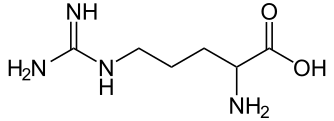
L-Arginine molecule (chemical formula: C₆H₁₄N₄O₂). Source: Wikimedia Commons (public domain/CC0).
However, it is worth remembering one crucial limitation. L-arginine is absorbed quickly, but it’s also rapidly broken down in the gut and liver, which means only a portion reaches the bloodstream, where it can be converted into nitric oxide. This bioavailability issue is one of the main reasons L-citrulline is often considered as an alternative or complement.
Key Benefits of L-Arginine for Blood Flow and Male Vitality
Recent research shows that L-arginine may support both circulation and exercise performance (PubMed PMID: 36904267, 2023). Some men use L-arginine as a dietary supplement to support healthy circulation and general wellness. Studies from 2022 to 2025 have explored its role in supporting normal blood flow and physical activity.
Circulation & Wellness Support
L-arginine is a dietary amino acid that may support healthy nitric oxide levels and normal vascular function. Maintaining these natural processes can contribute to overall circulation, helping the body sustain energy and support endurance as part of a balanced, active lifestyle.Exercise & Endurance Support
By supporting normal blood flow, L-arginine may help the body deliver oxygen and nutrients to muscles during physical activity, which can complement workouts and help you feel more energized.Cardiovascular Wellness
Some studies suggest L-arginine may play a role in maintaining healthy blood pressure and supporting overall heart wellness when used alongside a balanced diet and regular exercise.Recovery Support
L-arginine may assist the body’s natural post-exercise recovery processes, including nutrient delivery and metabolic support, helping you feel ready for your next workout or daily activities.
For a deeper look at natural compounds that support male sexual health—including icariin from horny goat weed—see “Icariin from Horny Goat Weed: Key Actions and Benefits.”
Some clinical studies have examined daily L-arginine doses ranging from 1,500 to 5,000 mg, noting potential improvements in markers of circulation and vascular function compared to placebo. Individual results may vary, and factors such as age, overall health, and lifestyle can influence outcomes.
What is L-Citrulline? The Sustainable Nitric Oxide Enhancer
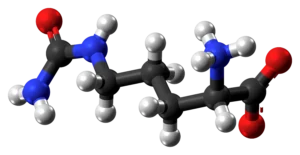
3D model of L-Citrulline molecule. Source: Wikimedia Commons (CC0 Public Domain).
L-citrulline is a naturally occurring amino acid found in foods such as watermelon. Unlike L-arginine, it does not directly produce nitric oxide (NO). Instead, the body converts L-citrulline into L-arginine, supporting a steady and longer-lasting supply that may help maintain healthy blood flow. Many men choose L-citrulline to complement an active lifestyle and support overall vascular wellness over time.
The Conversion Process: From Citrulline to Arginine and Beyond
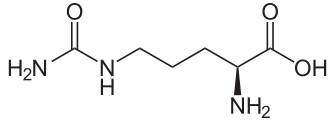
L-Citrulline molecule (chemical formula: C₆H₁₃N₃O₃). Source: Wikimedia Commons (public domain).
The body converts L-citrulline into L-arginine, helping maintain steady arginine levels and supporting nitric oxide production. This process may contribute to healthy blood flow and overall vascular wellness.
Research reviews, including a 2025 narrative review, suggest that this conversion cycle can support circulation and cardiovascular health when combined with a balanced lifestyle.
Unlike direct arginine supplementation, L-citrulline gradually accumulates in the body, offering a more consistent effect on nitric oxide levels over time, which may support general vascular health and endurance as part of an active lifestyle.
Advantages of L-Citrulline for Circulation and Wellness
L-citrulline offers several benefits that can complement overall vascular health:
Superior Bioavailability: L-citrulline may help increase plasma arginine levels more efficiently than arginine itself, supporting healthy nitric oxide production.
Circulation Support: By contributing to normal nitric oxide levels, L-citrulline may support healthy blood flow and vascular responsiveness as part of a balanced lifestyle.
Reduced Fatigue: Among active adults, L-citrulline may help reduce muscle fatigue and support endurance by supporting nutrient and oxygen delivery to working muscles.
Blood Pressure Support: Consistent supplementation may help maintain healthy blood pressure within normal ranges, supporting general cardiovascular wellness.
Recent 2025 studies have also explored topical applications of L-citrulline in relation to circulation, suggesting potential benefits for localized blood flow. Combining L-citrulline with regular exercise and a healthy lifestyle may enhance overall wellness and performance support.
L-Citrulline vs Arginine: A Head-to-Head Comparison
So, which comes out on top in the L-citrulline vs. arginine debate when it comes to blood flow? The answer depends on your goals. Here’s a quick comparison table:
| Aspect | L-Arginine | L-Citrulline |
|---|---|---|
| Mechanism | Supports nitric oxide production for circulation | Converts to arginine, providing sustained support for circulation |
| Absorption | Rapid but lower bioavailability | Higher, longer-lasting effects |
| Best For | Short-term circulation support, e.g., pre-workout | Daily support for ongoing vascular health |
| Circulation Support | May help maintain healthy blood flow | Often preferred for sustained circulation and endurance support |
| Side Effects | May cause mild digestive discomfort | Generally well tolerated |
| Research | Supported by studies on short-term vascular support | Emerging research for longer-term circulation benefits |
A 2025 study examining the combined use of L-citrulline and L-arginine found that this combination may support healthy nitric oxide levels and normal circulation, suggesting that using both together could provide complementary effects for overall vascular wellness.
L-citrulline is often preferred for daily use due to its higher absorption and more sustained support for nitric oxide production, making it a practical option for those aiming to maintain consistent circulation and energy throughout the day.
Recommended Dosages: Following US Guidelines for Safety
Getting the dosage right is important for supporting healthy circulation while minimizing potential risks. Based on U.S. health guidelines and findings from recent studies, typical daily intakes are:
L-Arginine: Common starting amounts are 1,500 to 5,000 mg per day, divided into two or three servings. Higher doses, sometimes used in clinical settings, should only be taken under medical supervision.
L-Citrulline: Daily doses of 3–6 grams are commonly used to support normal blood flow. Some people use slightly higher amounts (6–8 grams) as part of exercise or daily wellness routines, often in the form of citrulline malate.
Begin with the lowest effective dose and monitor your body’s response. Because dietary supplements are not regulated as strictly as prescription medications, choose products that are third-party tested for purity and potency.
For those taking both supplements together, combining 2–3 grams of each may help support healthy nitric oxide levels and normal circulation.
Potential Side Effects and Safety Tips
Both L-arginine and L-citrulline are generally considered safe for healthy adults when used as directed. Some people may experience mild digestive effects, such as nausea, bloating, or diarrhea, particularly at higher doses. L-citrulline is often better tolerated, with gastrointestinal discomfort reported only rarely.
Individuals with certain medical conditions, or those taking prescription medications, should consult a qualified healthcare professional before supplementing. This helps ensure safety and avoids potential interactions.
Long-term or high-dose use should be monitored, especially for people with underlying cardiovascular or metabolic concerns. Always follow product directions and start with the lowest effective dose.
Integrating L-Citrulline or Arginine into Your Daily Routine
To get the most from these dietary supplements, consider pairing them with simple, sustainable lifestyle habits:
Timing: Some people take L-arginine around workouts, while L-citrulline is often used daily to support overall wellness routines.
Diet Synergy: Include foods naturally rich in nutrients that support healthy circulation, such as beets, spinach, arugula, and other leafy greens.
Exercise: Cardiovascular training and resistance workouts may complement your supplement routine by supporting overall physical activity.
Track Your Progress: Observe energy levels, workout performance, and general wellbeing to see how lifestyle habits and supplementation work together.
Remember, these supplements aren’t cures—they’re tools that work best as part of a healthy, balanced lifestyle.
Frequently Asked Questions: Answering Your Top Questions About L-Citrulline vs Arginine

Below are some of the most common questions with clear, informed answers to help you make informed decisions.
Final Takeaway
In the end, L-citrulline vs. arginine isn’t about declaring a single winner—it’s about choosing what best supports your goals for healthy circulation, overall performance, and general male wellness. Whether you are looking to support workout performance or maintain healthy vascular function, these amino acids may offer potential benefits when used as part of a balanced lifestyle.
Start with conservative doses, stay consistent, and always consult a qualified healthcare professional before starting any supplement.
Your health journey is personal—make informed choices that support your wellbeing.
Medical Review
Medically reviewed by: Ali Abu Alburghol, MBBS UK-licensed physician Last updated: December 30, 2025
This article has been reviewed for scientific accuracy and safety by a qualified physician.


Important Disclaimer
The information in this article is for educational and informational purposes only and is not intended as medical advice or diagnosis. Nothing here should be considered a substitute for professional medical care. Always consult a qualified healthcare provider before starting any supplement, making major lifestyle changes, or if you suspect low testosterone or any other medical condition.
Individual results may vary. Statements about dietary supplements have not been evaluated by the FDA and are not intended to diagnose, treat, cure, or prevent any disease or health condition.
About the Author
Alpha Dualis Editorial Team All content is fact-checked and written according to strict editorial and scientific standards.